Weird Farms You Didn’t Know Existed
Most people’s idea of a farm is a place where animals—be it cows, goats, pigs or chicken—are grown and harvested for food. But unbeknownst to many of
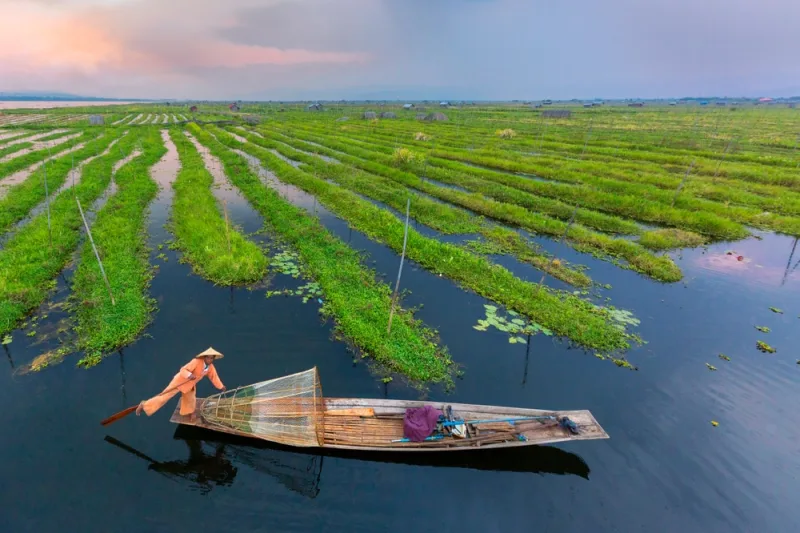
Most people’s idea of a farm is a place where animals—be it cows, goats, pigs or chicken—are grown and harvested for food. But unbeknownst to many of us, there are farms from all over the world that are in a league truly of their own. Odd yet fascinating, these farms were created for very specific reasons—some for prickly cacti, others for moose milk and even volcanic ash. All this and more will be uncovered in this list of weird farms you may have never heard of.\r \r 1. Iceland’s Geothermal Lit & Heated Farms\r \r At first glance, Iceland’s frozen climate doesn’t exactly make it a great candidate for opening a farming operation. However, at the family-operated Fridheimar Farm, they’ve found a solution to this problem in the form of greenhouses run by geothermal energy. They’re even able to operate during Iceland’s famous extended long hours of darkness due to the intense energy produced by the country’s active volcanoes. This energy is then converted into powerful lighting and heating which provides the plants—and their on-site café—with plenty of warmth.\r \r 2. Crazy Cactus Farms\r \r In New Mexico, cactus is heavily sought out and is often eaten like a fruit or vegetable over there. The growing demand for this prickly plant gave rise to unique farms such as Red Rock Ranch in California and Bach’s Cactus Nursery in Arizona. Though it should be mentioned that cacti farms do come with certain risks such as getting pricked by the sharp needles while harvesting the cacti, as well as the very tangible risk of serious injuries if a worker were to fall into a cactus patch.\r \r 3. Canary Island Volcano Ash Farming\r \r Volcanic ash has long been proven to be a great fertilizer for growing grapes for wine. This is due to the ash’s powerful and rich nutrients that help support rapid plant growth. Lanzarote, in the Canary Islands, is home to one of such farms where volcanic soil and ash is harvested for exactly this reason. Once the soil is retrieved, it is then stacked in the form of walls from which bright, juicy green grape vines are meticulously grown from.\r \r 4. Russia’s Moose Dairy Farm\r \r When it comes to farming for milk, cows, goats and sheep are often the go to animals for this. Russia, on the other hand, seems to have a thing for moose milk which they acquire by raising moose in farms much like any other domestic animal. Following their initial failure to use moose as calvary animals, the USSR set their sights on farming moose for their milk and meat in 1940 by opening the Pechora farm. When that failed, they set up the Kostroma farm in 1963 which proved to be highly successful. Today, moose milk is sold to a nearby hospital under the belief that it aids in the alleviation of ulcers.\r \r 5. Floating Farms of Myanmar\r \r What makes the floating farms of Myanmar unlike any other is the fact that its crops are grown on modified water plants in Myanmar’s Inle Lake. The plants in question are squeezing bulbous water hyacinth plants, which have a natural sponge, pith-like floats below each leaf, allowing the plant to float on the water’s surface and act as a huge vegetation mat. From there, sediments are piled onto these “water plant mats” upon which many crops are grown including squash, eggplants and tomatoes.