The Oddest Methods of Communication in the Animal Kingdom
Communication is a fundamental aspect of life, enabling individuals to convey information, establish social bonds, and coordinate various activities.
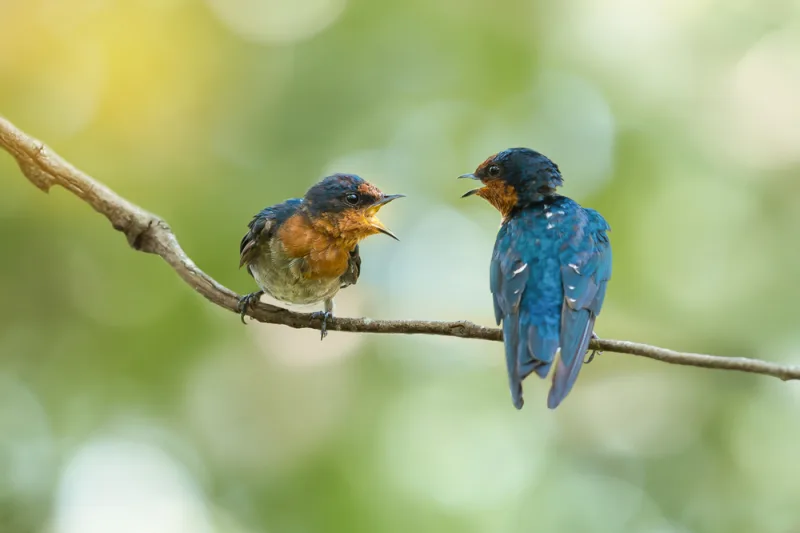
Communication is a fundamental aspect of life, enabling individuals to convey information, establish social bonds, and coordinate various activities. While humans have developed complex systems of language and technology to communicate, the animal kingdom exhibits a diverse array of communication methods, often employing extraordinary strategies to convey messages. In this article, we’ll take a look at the oddest methods of communication in the animal kingdom.
1. Electric Eels - Electrical Signals Electric eels are one of the most fascinating creatures in the animal kingdom, and their method of communication is equally impressive. Electric eels can generate electric signals of up to 600 volts, which they use to communicate with each other. These signals are produced by specialized cells called electrocytes, which are found in the eel's electric organs. When the eel wants to communicate with another eel, it emits a series of rapid electrical pulses, which are detected by the other eel's electroreceptors. In addition to communication, electric eels use electric signals to navigate their environment, locate prey, and defend themselves against predators.
2. Prairie Dogs - Vocalizations Prairie dogs are known for their complex vocalizations, which are used to communicate a wide range of information. These vocalizations include barks, chirps, and whistles, each of which has a specific meaning. For example, prairie dogs use a specific chirp to warn others of the presence of predators. They also use different barks to indicate the type of predator and its location. Prairie dogs have even been shown to have a language-like structure, with different combinations of calls used to communicate different messages. This complex system of communication helps prairie dogs to live in large social groups and avoid danger.
3. Cuttlefish - Chromatic Displays Cuttlefish are known for their ability to change color and pattern rapidly, and they use this ability to communicate with each other. Cuttlefish can produce a wide range of colors and patterns, which they use to signal aggression, submission, and courtship. For example, a male cuttlefish will display a dark band on its body when it is competing for a mate, while a female cuttlefish will display a white stripe to indicate that she is receptive to mating. Cuttlefish also use color and pattern changes to camouflage themselves from predators or prey, making them one of the most versatile communicators in the animal kingdom.
4. Bees - Waggle Dance Bees are known for their complex social structure and communication, and their method of communication is truly unique. When a scout bee finds a new food source, it returns to the hive and performs a dance called the "waggle dance." The waggle dance consists of a series of movements that communicate the location, distance, and quality of the food source to other bees in the hive. The angle of the dance indicates the direction of the food source relative to the sun, while the duration of the dance indicates the distance. By performing this dance, the scout bee is able to direct other bees to the food source, allowing the colony to collect more food efficiently.
5. Bats - Echolocation Bats are known for their ability to navigate and locate prey using echolocation. Echolocation involves emitting high-pitched sounds and listening for the echoes that bounce back off objects in the environment. By analyzing these echoes, bats are able to create a detailed map of their environment and locate prey with pinpoint accuracy. Bats also use echolocation to communicate with each other, emitting different types of calls to indicate aggression, submission, or mating readiness.