Roman Inventions We Still Use Today
The ancient Romans were known for their remarkable engineering prowess and innovative mindset. From grand architectural marvels to efficient infrastructure, their contributions continue to influence o...
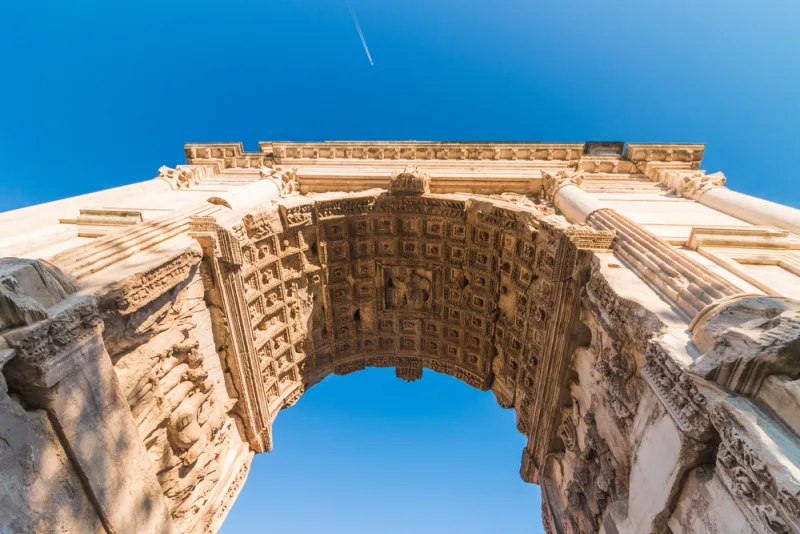
The ancient Romans were known for their remarkable engineering prowess and innovative mindset. From grand architectural marvels to efficient infrastructure, their contributions continue to influence our modern world. In this article, we will explore five Roman inventions that have withstood the test of time and are still an integral part of our lives today. These remarkable creations demonstrate the Romans' ingenuity and their ability to devise solutions that have endured for centuries. So, let's embark on a journey through time and discover the enduring legacy of Roman innovation.
1. Concrete
One of the most significant Roman inventions that revolutionized construction is concrete. The Romans perfected the recipe for creating durable and long-lasting concrete by mixing volcanic ash, lime, and aggregate, such as rocks and stones. This revolutionary building material allowed the Romans to construct monumental structures like the Colosseum, aqueducts, and expansive road networks that still stand today. The secret to Roman concrete's longevity lies in its chemical composition. When exposed to seawater, the concrete would react with it, forming new minerals that reinforced the structure and made it even stronger over time. This ingenious innovation in construction materials has had a profound impact on modern architecture and engineering. Concrete remains a crucial component in the construction of buildings, bridges, dams, and other infrastructure projects, showcasing the lasting legacy of Roman ingenuity.
2. Aqueducts
The Roman aqueducts stand as a testament to the engineering marvels of ancient Rome. These impressive structures were designed to transport water from distant sources to cities and towns, ensuring a constant and reliable water supply. The aqueducts consisted of a series of stone arches that supported a channel, allowing water to flow downhill by gravity. The Romans' meticulous planning and precise engineering techniques enabled them to construct aqueducts that spanned great distances and conquered challenging terrains. These aqueducts not only provided water for drinking, bathing, and irrigation but also supported the growth of urban centers. Today, modern cities still rely on similar principles of water management and distribution, with aqueducts serving as inspiration for modern water supply systems.
3. Roads
The Romans were renowned for their extensive network of roads, which facilitated efficient transportation and communication throughout their vast empire. They constructed thousands of miles of well-engineered roads that connected major cities, military outposts, and trade routes. The Roman roads were built with a carefully designed foundation, layers of compacted materials, and a smooth surface of tightly fitted stones or paving blocks. The Roman road network had a profound impact on the development of trade, commerce, and cultural exchange. Even today, we can see the influence of Roman road-building techniques in our modern highway systems. The concept of durable, well-constructed roads laid the foundation for efficient transportation and connectivity, forming the backbone of modern infrastructure.
4. Central Heating Systems
The Romans were pioneers in creating comfortable living spaces, as evidenced by their advanced central heating systems known as hypocausts. The hypocaust system utilized a network of raised floors and walls that allowed hot air to circulate beneath buildings. This ingenious method effectively heated large structures, such as public baths and villas, providing warmth even in colder climates. The concept of the hypocaust influenced the development of modern heating systems, including radiant floor heating. Today, underfloor heating is widely used in homes, offices, and other buildings, providing efficient and comfortable heating.
5. Arches and Domes
The Romans were masters of architectural innovation, and their use of arches and domes revolutionized the field of construction. The arch, a semicircular structure that redistributes weight and provides excellent stability, allowed the Romans to create vast and grand structures. The Colosseum, with its intricate system of arches, stands as a prime example of their architectural brilliance. Furthermore, the Romans expanded on the concept of arches to create domes, which offered even greater architectural possibilities. The magnificent dome of the Pantheon in Rome, with its unique design and oculus at the top, is an enduring symbol of Roman engineering. The architectural principles of arches and domes have influenced countless structures throughout history, from iconic landmarks to modern buildings, showcasing the lasting impact of Roman innovation.