Remarkable Things We Can Train Animals to Do
Most animals are kept as pets and their primary role is to just be adorable and provide comfort and company. However, some animals actually have jobs.
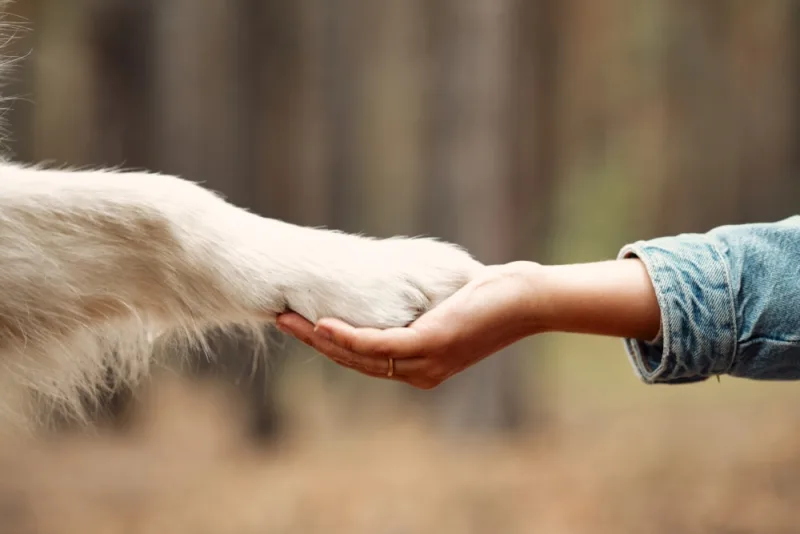
Most animals are kept as pets and their primary role is to just be adorable and provide comfort and company. However, some animals actually have jobs. They can be trained, depending on their level of intelligence, their response to stimuli and their adaptation for survival. Scientists have found ways to capitalize on these characteristics and to train animals, some of which you might not expect, to exhibit certain behaviors. These learned behaviors have been found to be quite useful. In this article, we’ll explore five things that animals have been trained to do. \r \r 1. Sniffing Out Bed Bugs\r \r It only takes one pregnant bed bug lurking in your home to generate a full-blown bed bug infestation. If this happens, it’s important to know that they can easily be detected by wasps and dogs. Wasps can be trained to react to the odor of the pheromones of bed bugs. Glen Rains and Joe Lewis were successfully able to train stinger-free wasps to move to the center of the container they’re in when they detected bed bugs. Dogs can be trained to identify bed bugs at any phase of their life cycle, in any crevice, making bed bug detection dogs more effective than even humans.\r \r 2. Currency Detection Dogs\r \r Currency detection dogs are specially trained to identify significant sums of hidden money. Canine currency detection teams are frequently employed by police enforcement personnel to examine buildings, goods, baggage, cars, and places where large amounts of money are allegedly hidden. Some can even be trained to detect counterfeit. Large quantities of money must be disclosed to border agents, so persons who attempt to traffic more than $10,000 can be caught thanks to the distinct odor of money and the powerful noses of these trained dogs. Jagger, a Labrador retriever from Canada, has intercepted over $70 million in his career.\r \r 3. Rats Detect Explosives and Tuberculosis\r \r Who said rats should only be derided as dirty, dangerous and diseased? Just imagine that rats can be trained to detect tuberculosis and help save lives. This is a real eye opener, right? Scientists say that these trained rats can detect tuberculosis much quicker than humans because of their superior sense of smell. They are also sixty-eight percent more efficient than tests for tuberculosis. Their incredible sense of smell also helps them in detecting explosives. The chemical components of explosives like landmines can be detected by African pouched rats. These rats weigh about three pounds and are perfect for the job because they’re not heavy enough to trip explosives. \r \r 4. Bees Detect Cancer and Explosives\r \r Bees do not have noses but are specially equipped with olfactory sensors in various parts of their body that help them detect the biomarkers for cancer. The trained bees are placed in a container and the patient breathes into it. The bees gravitate to the smell if the biomarkers are sensed. Scientists say that the sense of smell of bees can be up to fifty times higher than a dog’s. Bees also have the ability to spot landmines. A link between the smell of explosives and sugar water is used to train bees to believe the smell is that of nectar. \r \r 5. Dogs Spot Illnesses\r \r Some diseases can be detected by smell and man’s best friend is equipped to do just that. Not only are they good companions and protectors but they can also be trained to sniff out numerous illnesses like cancer, low blood sugar, oncoming seizures and even COVID-19. Various health conditions cause changes in the hormone levels in the body which bring about changes in the body’s odor in ways that dogs can immediately recognize. So dogs can truly save lives in more ways than one.