Foods That Were Renamed for Political Reasons
Food has always been intertwined with culture, tradition, and even politics. Throughout history, various foods have undergone name changes due to political factors, such as cultural shifts, national i...
Food has always been intertwined with culture, tradition, and even politics. Throughout history, various foods have undergone name changes due to political factors, such as cultural shifts, national identity, or diplomatic relationships. In this article, we delve into five notable examples of foods that were renamed for political reasons, to highlight the impact of political and social contexts on culinary identity.
1. Freedom Fries
In 2003, following France's opposition to the United States' invasion of Iraq, certain members of the U.S. Congress spearheaded a movement to rename French fries as "freedom fries." The aim was to express dissent towards France's stance on the international stage. Numerous restaurants and cafeterias across the country followed suit, swapping out "French" for "freedom" on their menus. This renaming gesture served as a symbolic act of protest, reflecting the tense diplomatic relations between the United States and France during that time. The term "freedom fries" captured the patriotic sentiment and expressed a sense of solidarity within the American population. However, as time passed, the renaming trend gradually faded, and the term "French fries" reclaimed its place on menus.
2. Red Bean Paste
During the Cultural Revolution in China (1966-1976), culinary traditions faced significant changes as the country underwent a radical transformation. One notable example is the renaming of "red bean paste" to "five heroes bean paste." The original name, associated with traditional Chinese culture, was deemed incompatible with the Communist ideology promoted during that period. The renaming was part of a larger effort to promote revolutionary ideals and eradicate symbols of the past. By rebranding the sweet paste, authorities sought to align culinary terminology with political rhetoric. While the renaming trend persisted for a time, the original name eventually made a comeback as the cultural and political climate shifted in subsequent decades.
3. German Chocolate Cake
Despite its name, German chocolate cake is not actually from Germany. The confection was named after Sam German, an American chocolate maker who developed a particular type of baking chocolate in the mid-19th century. The cake itself gained popularity in the United States, especially in the 20th century, where it became associated with a specific brand of chocolate. Interestingly, during World War II, when anti-German sentiment was high in the United States, the name "German chocolate cake" faced scrutiny. In an effort to distance the cake from its supposed German origins, the name was briefly changed to "good chocolate cake." However, this renaming attempt did not stick, and the original name resurfaced once the war ended.
4. Belgian Waffles
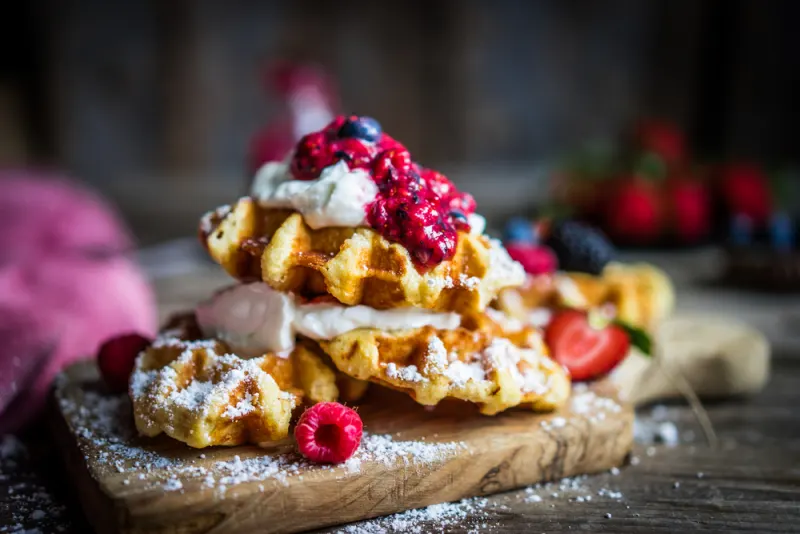
Belgian waffles, with their distinctive square pockets and fluffy texture, are renowned worldwide. However, during the early 20th century, the name "Belgian waffles" underwent a temporary transformation in the United States. In 1962, as part of a marketing campaign to popularize waffles at the Seattle World's Fair, Maurice Vermersch, a Belgian chef, introduced the treat as "Brussels waffles" to cater to American palates. The name change aimed to make the waffles more appealing to the fair's visitors, and it proved successful. The renaming helped establish the waffles as a beloved culinary delight in the United States, leading to the widespread adoption of the name "Belgian waffles" to refer to this particular style of waffle.
5. Patatas Bravas
Patatas bravas, a classic Spanish dish consisting of fried potatoes served with a spicy tomato-based sauce, experienced a subtle renaming phenomenon during the Francoist regime in Spain (1939-1975). The dish was originally called "patatas a la importancia," but the term "bravas" (meaning "fierce" or "bold") was introduced to emphasize the spicy nature of the accompanying sauce. However, during Franco's rule, the word "bravas" acquired a political connotation associated with the nationalist ideology promoted by the regime. Consequently, the dish's name was briefly changed to "patatas bravas" to align it with Francoist rhetoric. The renaming aimed to foster a sense of nationalistic pride and to reinforce a unified cultural identity. After the end of the Francoist era, the original name, "patatas a la importancia," regained prominence.