Five of The Strongest Materials Known to Humankind
Strength is a characteristic that has fascinated humans since ancient times. Throughout history, scientists and engineers have relentlessly pursued the discovery and development of materials that poss...
Strength is a characteristic that has fascinated humans since ancient times. Throughout history, scientists and engineers have relentlessly pursued the discovery and development of materials that possess exceptional strength properties. Which is why we’ll dive into the world of materials science and explore five of the strongest materials known to humankind. From the incredible properties of graphene to the astonishing strength of carbon nanotubes, these materials showcase the remarkable achievements of human ingenuity and offer a glimpse into a future where strength knows no bounds.
1. Graphene
Graphene, often referred to as a wonder material, is a one-atom-thick layer of carbon atoms arranged in a hexagonal lattice. Despite its simplicity, graphene possesses extraordinary strength, making it the strongest material ever measured. Its remarkable strength is derived from the strong covalent bonds between carbon atoms and the unique arrangement of its atomic structure. Not only is graphene incredibly strong, but it also exhibits exceptional electrical conductivity, thermal conductivity, and flexibility. These exceptional properties have sparked immense interest in numerous industries. From electronics and energy storage to aerospace and biomedical applications, graphene holds the potential to revolutionize various fields by enabling faster and more efficient devices and systems.
2. Carbon Nanotubes
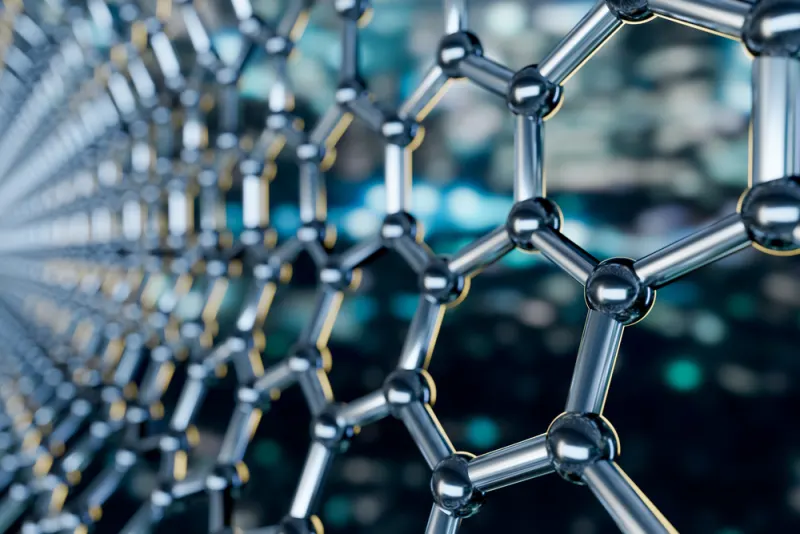
Carbon nanotubes (CNTs) are tubular structures composed of rolled-up graphene sheets. They possess unparalleled strength and are considered one of the toughest and most durable materials ever discovered. With tensile strengths up to 100 times greater than steel, carbon nanotubes are incredibly strong, yet remarkably lightweight. The exceptional strength of carbon nanotubes can be attributed to their unique atomic structure. The carbon atoms form strong covalent bonds, resulting in a material capable of withstanding tremendous forces without breaking or deforming. Furthermore, their cylindrical shape enables them to distribute stress evenly, further enhancing their strength. Carbon nanotubes have the potential to revolutionize numerous industries. Their exceptional strength and electrical conductivity make them promising candidates for applications in electronics, energy storage, aerospace, and even medicine. From reinforced composites to high-performance batteries, they are paving the way for stronger, lighter, and more efficient technologies.
3. Titanium Alloys
Titanium alloys are widely recognized for their exceptional strength-to-weight ratio, making them highly sought after in industries where lightweight and strong materials are crucial. These alloys, composed primarily of titanium with small amounts of other elements, exhibit excellent mechanical properties, including high strength and corrosion resistance. The remarkable strength of titanium alloys can be attributed to the strong bonding between titanium atoms and the precise control of alloying elements. This combination allows for the formation of a crystal structure that maximizes strength and toughness while maintaining a relatively low density. Due to their outstanding properties, titanium alloys find applications in various industries, including aerospace, automotive, and biomedical. Aircraft components, sports equipment, and medical implants are just a few examples of where titanium alloys shine, providing strength and reliability while reducing weight.
4. Ceramic Matrix Composites
Ceramic matrix composites (CMCs) are a class of materials composed of a ceramic matrix reinforced with high-strength fibers. These materials exhibit remarkable strength and exceptional resistance to high temperatures and harsh environments. The strength of CMCs stems from the combination of a ceramic matrix and high-strength fibers, such as carbon or silicon carbide. The ceramic matrix provides stability and high-temperature resistance, while the fibers contribute to the overall strength and toughness of the material. CMCs find applications in aerospace, gas turbine engines, and other high-temperature environments where traditional materials would fail. Their exceptional strength and ability to withstand extreme conditions make them invaluable for achieving enhanced performance and efficiency in critical applications.
5. Metal Matrix Composites
Metal matrix composites (MMCs) are materials composed of a metal matrix with dispersed high-strength reinforcements, such as ceramic fibers or particles. This combination results in materials that exhibit exceptional strength, high stiffness, and enhanced thermal and electrical properties. The strength of MMCs arises from the synergistic effect between the metal matrix and the reinforcing materials. The metal matrix provides toughness and ductility, while the reinforcements contribute to the overall strength and hardness of the material. MMCs find applications in various industries, including aerospace, automotive, and electronics. They are used in critical components that require high strength, wear resistance, and thermal management. From advanced engine components to lightweight structural elements, MMCs offer the potential for improved performance and reliability.