Five Amazing Fish That Hunt Land Animals
When we think of fish, we often imagine them swimming in water, capturing prey that dwells within their aquatic habitat. However, there are some exceptional species of fish that have evolved unique ad...
When we think of fish, we often imagine them swimming in water, capturing prey that dwells within their aquatic habitat. However, there are some exceptional species of fish that have evolved unique adaptations, enabling them to venture onto land and hunt land-dwelling animals. Today, we’re going to take a closer look at five fascinating fish species that have developed extraordinary abilities to catch and consume prey on land. These remarkable examples demonstrate the incredible adaptability of fish and the diverse strategies they employ to survive and thrive in different environments.
1. Mangrove Rivulus
The mangrove rivulus, also known as the killifish, is a small fish species found in the mangrove forests of the Americas. What sets this fish apart is its ability to breathe air and survive on land for extended periods. During low tide or in search of food, the mangrove rivulus can venture onto the land using its pectoral fins to "walk" or "skip" across the surface. Once on land, it uses its specialized skin to exchange gases, enabling it to breathe atmospheric oxygen. Remarkably, the mangrove rivulus is capable of capturing and consuming small land-dwelling invertebrates, such as insects and spiders, while on its terrestrial excursions. Its ability to move and feed on land demonstrates the remarkable adaptability of fish and their capacity to exploit new ecological niches.
2. Climbing Perch
The climbing perch is a remarkable fish species found in Southeast Asia. It possesses a unique adaptation that allows it to move across land using its modified gill chambers as primitive lungs. During periods of drought or when its aquatic habitat becomes inhospitable, the climbing perch can wriggle its way across land, using its spiny pectoral fins and strong pelvic fins for support. Not only can the climbing perch move on land, but it also possesses a voracious appetite for land-dwelling prey. It can capture insects, small amphibians, and even rodents by leaping out of the water or ambushing them while on land.
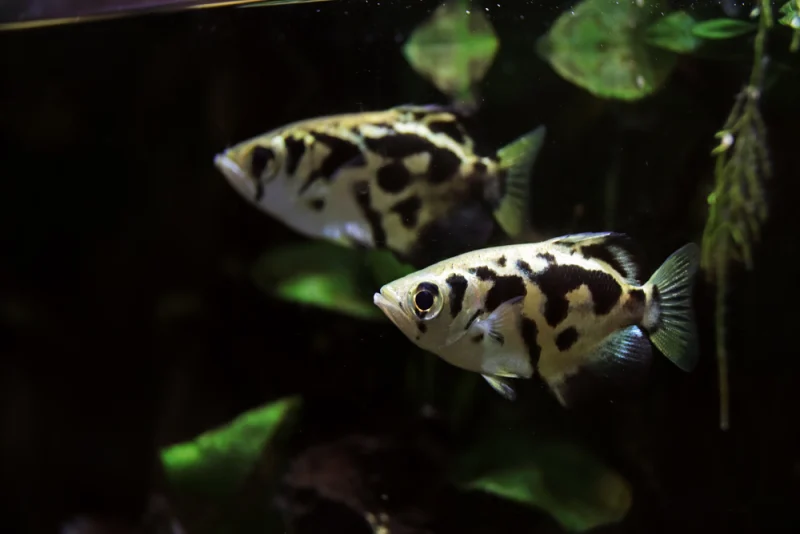
3. Archerfish
The archerfish is a fascinating species known for its unique hunting technique. Found in brackish waters and estuaries of Southeast Asia and Australia, the archerfish has the remarkable ability to shoot down land-based prey with water expelled from its mouth. It precisely aims at insects perched on leaves or branches above the water's surface and forcefully spits a jet of water, knocking the prey into the water, where it can be easily consumed. The archerfish's hunting method requires exceptional accuracy, as it must calculate the precise trajectory and distance to hit its target. This skill is achieved by adjusting the angle of its mouth and controlling the force of its water expulsion.
4. Walking Catfish
The walking catfish, found in freshwater habitats of Southeast Asia and parts of Africa, is aptly named for its ability to walk on land using its pectoral fins and specialized bony plates. During the rainy season or when its aquatic environment becomes overcrowded or unfavorable, the walking catfish can venture onto land and search for new habitats. On land, the walking catfish is capable of absorbing oxygen through its skin and using its labyrinth organ, an accessory breathing structure, to extract atmospheric oxygen. It can survive for several days or even weeks on land, allowing it to search for new sources of food. While on land, the walking catfish feeds on a variety of prey, including insects, small crustaceans, and even small vertebrates.
5. Mudskippers
Mudskippers are a group of unique fish species found in mangrove swamps and intertidal areas of the Indo-Pacific region. These fish have evolved specialized adaptations that enable them to move and breathe on land. With their strong pectoral fins, mudskippers can hop, crawl, and skip across muddy surfaces. They also have the ability to extract oxygen from the air through their skin and the lining of the mouth and throat. Mudskippers primarily feed on small invertebrates such as insects, crustaceans, and worms. They use their exceptional vision to spot prey on land and catch them with their protrusible mouths.