Egypt’s Most Important Pharaohs
Ancient Egypt is known for its magnificent pyramids, mummies, sphinx and pharaohs. Egypt proved to have some of the most powerful rulers who reigned s
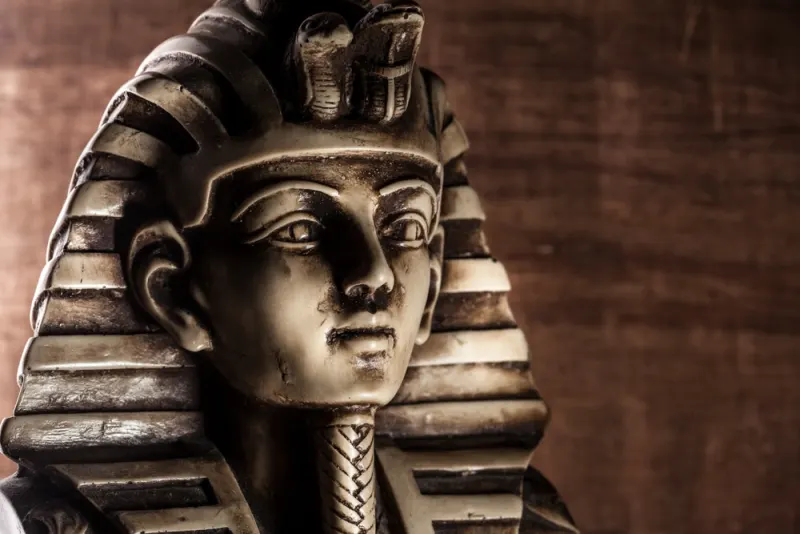
Ancient Egypt is known for its magnificent pyramids, mummies, sphinx and pharaohs. Egypt proved to have some of the most powerful rulers who reigned supreme and made Egypt one of the greatest civilizations. They were revered as both political leaders and deities. The monarch, the father, bequeathed the throne to his eldest son after his death, and via this royal bloodline, the pharaohs inherited the crown. This isn’t to say that women didn’t become pharaohs. Let’s acknowledge some of the most important pharaohs of Egypt. \r \r 1. Hatshepsut\r \r Although female pharaohs were rare in ancient Egypt, Hatshepsut was one of Egypt’s most successful rulers. She ruled between 1478 BC and 1458 BC and was the fifth ruler of the eighteenth dynasty of Egypt. Hatshepsut ascended to the throne following the passing of her husband. During her reign of over two decades, she undertook several building projects. Under her leadership, one of the architectural wonders of ancient Egypt, the memorial temple at Deir el-Bahri was constructed. Hatshepsut also established routes for foreign trade. \r \r 2. Thutmose III\r \r Thutmose III was the stepson of Hatshepsut. He should have been king after his father’s passing since he was the only son, however, he was only two-years-old. As such, Hatshepsut ascended the throne. He became king after Hatchepsut passed away and reigned for several years. Thutmose had many accomplishments and military achievements. He worked towards the expansion of the Egyptian kingdom. Thutmose was a renowned warrior who fought many enemies to defend Egypt and his people. He made significant contributions to the building of several sites such as the temple at Karnak.\r \r 3. Ramses II\r \r Scholars believe that Ramses II, the third pharaoh of the nineteenth dynasty, was the greatest pharaoh Egypt had ever seen. He had a successful military career and overcame numerous adversaries, including the Hittites, Syrians, and Nubians, while commanding several military operations. He defeated the Hittites at the Battle of Kadesh which resulted in a treaty between the two sides. This is one of his finest accomplishments. Ramses also constructed numerous religious temples and monuments throughout Egypt that are today a part of Egyptian heritage.\r \r 4. Tutankhamun\r \r Tutankhamun was Akhenaten's son and succeeded his father to the throne when he was just about nine-years-old. His father was known for instituting Atenism which was not popular among the people and many believe it was to the detriment of Akhenaten’s reign. As such, Tutankhamun spent time reversing some of the policies of his father. Since he was still a minor, Ay, his trusted advisor, who succeeded Tutankhamun, made most of the decisions. Tutankhamun passed away at seventeen-years-old and became famous posthumously. His tomb was discovered in 1922 in the Valley of the Kings. Unlike other tombs of pharaohs that had been found, his tomb was intact. There were over 5,000 items along with his mummy in the tomb which gave much insight into that era. \r \r 5. Cleopatra VII\r \r The final pharaoh of the Ptolemaic Kingdom was Cleopatra VII, also known as Cleopatra Philopator. Although she wasn’t a native Egyptian, she proved to be an eminent leader for twenty-one years. Egypt's monarchy flourished during her rule thanks to a number of measures that were implemented to boost the country's economy. Her personal and political connections abroad turned out to be quite valuable to the monarchy and encouraged a lot of successful trade. Though Cleopatra was the subject of several scandals such as fighting her brother Ptolemy XIII over the throne and her affair with Mark Anthony, her leadership can’t be questioned. \r \r