Animals That Are Seen as Holy
Throughout human history, animals have played significant roles in various cultural, religious, and spiritual traditions. Some animals are revered and considered holy due to their symbolic association...
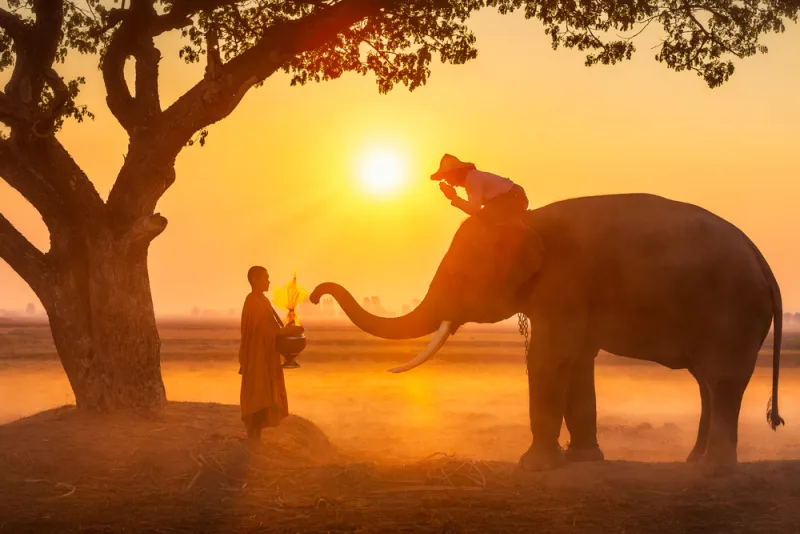
Throughout human history, animals have played significant roles in various cultural, religious, and spiritual traditions. Some animals are revered and considered holy due to their symbolic associations, perceived divine qualities, or their connection to mythology and folklore. In this article, we’ll examine five different animals that hold sacred status in different cultures around the world, shedding light on the diverse ways in which humans have revered and honored these creatures.
1. The Cow
In Hinduism, the cow holds a sacred and revered position. Known as "Gau Mata" or "Mother Cow," it is considered a symbol of purity, abundance, and fertility. Cows are believed to embody the divine and are associated with several Hindu deities, particularly Lord Krishna. They are worshipped during festivals like Gopashtami and are regarded as a source of nourishment and sustenance through milk, ghee, and other dairy products. In India, cows roam freely and are protected, with laws in place to prevent their harm or slaughter. The veneration of cows in Hinduism reflects the importance of compassion and reverence for all life. The cow's gentle nature and its role in sustaining human life have earned it a position of great respect and sanctity within Hindu culture.
2. The Elephant
In various cultures, elephants are considered sacred animals associated with wisdom, strength, and longevity. In Hinduism, Lord Ganesha, the deity of wisdom and prosperity, is depicted with an elephant head. Elephants are revered as symbols of auspiciousness and are an integral part of religious processions and ceremonies. In Buddhism, the white elephant is seen as a spiritual being and a symbol of enlightenment. The Dalai Lama is believed to be the incarnation of Avalokiteshvara, who is associated with a white elephant. The worship of elephants shows the profound respect humans have for these majestic creatures and their attributes.
3. The Falcon
In ancient Egyptian mythology, the falcon was considered a sacred bird associated with the sun god Ra. The falcon-headed god Horus, representing divine kingship and protection, was one of the most significant deities in the Egyptian pantheon. Falcons were believed to have a connection with the heavens, carrying the souls of the deceased to the afterlife. These birds were also associated with keen eyesight and were believed to possess a divine ability to perceive and navigate the spiritual realm. The reverence for falcons in ancient Egyptian culture reflects their significance as powerful symbols of divinity, royalty, and transcendence.
4. The White Buffalo
In Native American cultures, particularly among the Lakota Sioux, the white buffalo holds immense spiritual significance. Considered a sacred symbol of purity, abundance, and unity, the birth of a white buffalo calf is seen as a rare and extraordinary event with profound spiritual implications. It is believed to bring messages of peace, harmony, and spiritual awakening. The white buffalo calf is associated with the White Buffalo Calf Woman, a revered figure in Native American mythology who brought sacred teachings to the people. The appearance of a white buffalo calf is seen as a powerful and sacred sign, inspiring reverence and spiritual reflection.
5. The Serpent
In many ancient civilizations, including those of ancient Egypt, Greece, and Mesoamerica, the serpent held a complex and multifaceted role in religious and mythological beliefs. Often associated with creation, fertility, wisdom, and rebirth, serpents were revered as divine beings embodying both positive and negative aspects. In Hinduism, the serpent god Shesha supports the world on his multiple hoods, symbolizing cosmic balance and protection. In Greek mythology, the serpent-like creature Python guarded the Delphic Oracle and was eventually slain by the god Apollo, representing the triumph of light over darkness. Their association with life cycles, transformation, and hidden knowledge highlights the deep spiritual connections humans have perceived in these animals.