Absolute Monsters Who Got Immunity for Their Crimes
In the realm of criminal justice, it is a commonly held belief that no one should be above the law. However, history has shown us instances where individuals who committed heinous crimes managed to es...
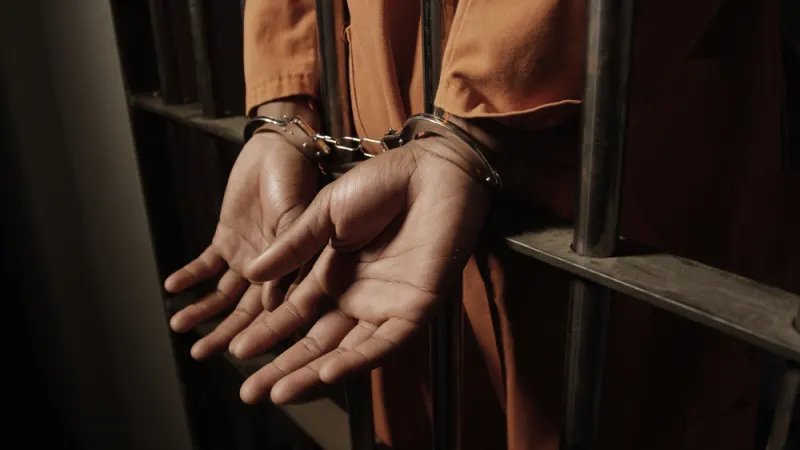
In the realm of criminal justice, it is a commonly held belief that no one should be above the law. However, history has shown us instances where individuals who committed heinous crimes managed to escape the full extent of legal consequences and received immunity for their actions. These cases serve as chilling reminders of how justice can sometimes be elusive and how certain individuals have managed to evade accountability despite their monstrous acts. Today, we’ll take a closer look at five individuals who, for various reasons, obtained immunity for their crimes, leaving a lasting impact on society.
1. Augusto Pinochet
Augusto Pinochet, the former dictator of Chile, ruled the country with an iron fist from 1973 to 1990. During his regime, thousands of individuals were subjected to torture, forced disappearances, and extrajudicial deaths. Despite these atrocities, Pinochet managed to avoid prosecution for the majority of his crimes. This was partly due to the amnesty laws put in place during his rule, which shielded him and his accomplices from legal repercussions. However, in the late 1990s, Pinochet's immunity was challenged when he was arrested in London on charges of human rights violations. The legal battle that followed brought global attention to his crimes and sparked a debate on the limits of immunity for heads of state. Although Pinochet ultimately evaded punishment due to his failing health, his case highlighted the struggles in holding powerful individuals accountable for their monstrous actions.
2. Ratko Mladić
Ratko Mladić, a former Bosnian Serb military commander, played a pivotal role in the Bosnian War (1992-1995). During this conflict, Mladić orchestrated numerous war crimes, including the Srebrenica massacre, where more than 8,000 Bosnian Muslims died. Despite his egregious acts, Mladić managed to evade justice for over a decade, living freely in Serbia. It wasn't until 2011 that Mladić was finally arrested and brought before the International Criminal Tribunal for the former Yugoslavia (ICTY). His trial shed light on the extent of his monstrous crimes and the long-lasting trauma inflicted upon the victims. In 2017, Mladić was found guilty of genocide, war crimes, and crimes against humanity, becoming one of the few individuals held accountable for their actions during the Balkan conflicts.
3. Henry Kissinger
Henry Kissinger, a prominent American diplomat and statesman, served as the U.S. Secretary of State under Presidents Richard Nixon and Gerald Ford. While Kissinger played a significant role in shaping U.S. foreign policy during the Vietnam War and other conflicts, his actions also raised allegations of war crimes and human rights violations. One notable case is the U.S. bombing campaign in Cambodia during the Vietnam War, where thousands of civilians died. Despite the controversy surrounding his role in these operations, Kissinger has never faced criminal charges or been held accountable for his actions. Critics argue that his immunity is a result of his influential position and the geopolitical complexities of the time. Nevertheless, Kissinger's legacy is a reminder that even individuals in positions of power can evade legal consequences for their alleged monstrous acts.
4. Omar al-Bashir
Omar al-Bashir, the former President of Sudan, is another example of a leader who managed to escape accountability for his crimes. During his presidency, al-Bashir was accused of orchestrating genocide, war crimes, and crimes against humanity in the region of Darfur. The conflict in Darfur resulted in the deaths of hundreds of thousands of people and the displacement of millions. Although the International Criminal Court (ICC) issued arrest warrants for al-Bashir, he remained in power for over a decade before being ousted by a popular uprising in 2019. Despite his removal from office, al-Bashir has yet to face trial for his alleged crimes. The case of Omar al-Bashir underscores the challenges in bringing to justice individuals accused of monstrous acts, particularly when they maintain a tight grip on power.
5. Albert Pierrepoint
Albert Pierrepoint, often referred to as the "Official Hangman" of the United Kingdom, holds a unique position on this list. As a renowned executioner, Pierrepoint carried out hundreds of hangings during his career, including those of war criminals convicted of atrocities committed during World War II. While Pierrepoint did not commit the crimes himself, his role in executing individuals who had committed monstrous acts raises ethical questions. Despite his involvement in these executions, Pierrepoint received immunity for his actions. He retired in 1956 and went on to write a memoir, shedding light on the practice of capital punishment in the United Kingdom.